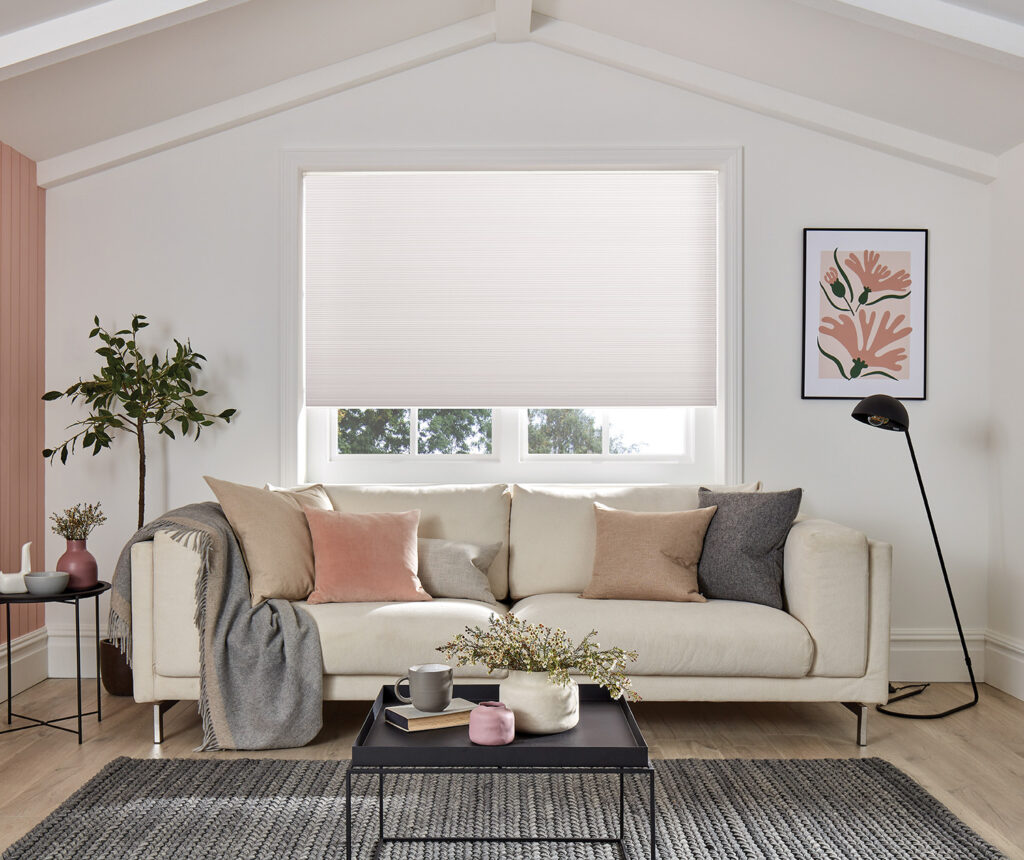
White reflects heat, black absorbs it. So white blinds must be best for summer, right?
White or light-coloured blinds can help reduce heat build-up by reflecting more sunlight than darker colours, but colour alone won’t keep your home cool. The blind’s fabric, lining, backing, fit, position and how you use it during the day all affect how well it controls summer heat and glare.
So, are white blinds actually cooler?
Sometimes, but not always.
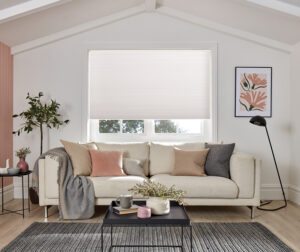
White blinds can help because pale colours reflect more light than darker colours. This means a white or light-coloured blind may absorb less heat than a dark blind in the same position. However, there’s a catch.
A thin white fabric may still let a lot of sunlight through. It might soften the brightness, but it may not do much for heat or glare. On the other hand, a darker blind with a specialist reflective backing could perform better.
If you are choosing blinds for a room that tends to overheat, do not rely on colour alone. Ask what the fabric does. Is it light-filtering, dim-out, blackout, thermal or solar-reflective? Does it have a coating on the side facing the glass? How closely will it fit against the window?
Both sides of your blind are important
Most people choose blinds based on the colour they want to see in the room. That is understandable; blinds are part of the decor. But for summer heat control, the side facing the window is just as important.
A blind with an aluminium-backed or solar-reflective coating can help reflect sunlight back towards the glass. That can be useful even if the inside-facing colour is darker, softer or more decorative.
Therefore, two blinds that initially look similar can perform very differently in a sunny room. One might be a standard fabric. Another might have a backing designed to help with glare, light and temperature control.
If you like the look of a darker blind, you do not necessarily have to rule it out for summer. It may still be a good option if the backing is designed for solar control.
What are the best blinds for keeping heat out?
Cellular insulating blinds
Cellular blinds have a honeycomb structure that traps pockets of air within the fabric. This helps create an insulating layer at the window, which has benefits throughout both summer and winter. In hot weather, that extra layer can help reduce the effect of strong sunlight coming through the glass. In colder months, it can also help limit heat loss through the window.
We offer specialist cellular fabrics with coatings designed for stronger light and heat control. Our SPC® Solar Protective Coating fabrics reduce glare, control light and keep the home cooler, making them a good option for rooms that get bright or uncomfortable during the day.
For bedrooms and spaces where stronger sunlight protection is needed, our ESP® Energy and Solar Protection blackout coating offers added performance. It helps block incoming light, gives better protection from direct sun, and supports temperature regulation at the window.
Perfect Fit Blinds
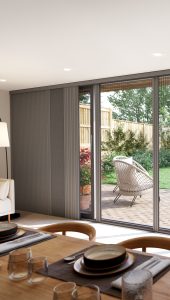
Instead of hanging in front of the recess, Perfect Fit blinds clip neatly into suitable uPVC frames. They do not need drilling or screws, and they move with the window or door. That makes them especially useful for patio & French doors, tilt-and-turn windows, conservatories, extensions and some skylights.
When it comes to controlling summer heat and light, their neat fit is the main benefit. Perfect Fit blinds sit close to the glass, which can reduce the amount of light spilling around the sides compared with some standard blinds.
They do not magically make a room cooler on their own. But if you choose the right fabric, the close fit can help it work more effectively.
What about shutters?
Because shutters also sit closely to the window and are made to measure for a snug fit, they are another form of window covering that provides excellent insulation.
For the summer months, they excel because of their adjustability. You can tilt the louvres to reduce direct sun while still allowing some daylight and airflow. This is useful in rooms where you do not want to sit in full brightness, but you also do not want the space to feel dark.
What if internal blinds are not enough?
Perhaps you’ve already tried one or more of these solutions, but you’re still struggling with rooms that overheat. If your room gets excessive amounts of sunlight, internal blinds may not do enough to prevent solar heat gain. This is because the heat has already penetrated through the glass of your window by the time it hits your internal blind.
External screens and awnings block sun and heat before it has a chance to touch the glass. Usually, that is more effective than trying to manage the heat once it is already inside the room. External screens can be particularly useful for windows and glazed doors that get strong sun for long periods. Awnings can help shade windows, doors and outdoor seating areas at the same time.
For the worst summer heat problems, an external solution may be the best fit. They are well suited to conservatories, large patio or bifold doors, south or west-facing rooms, rooms with very large windows, or spaces that trap heat easily.
Final verdict
White blinds can help keep rooms cooler, but they are not automatically the best option for every window. A well-fitted blind with the right fabric, backing or coating will often do more than choosing the palest fabric available.
When making your decision, approach each room one by one. Think about where the sun comes from, how hot the room gets, how much light you want to keep, and how you use the space day to day.
If you are not sure which option is right for your home, visit our showroom. We’d be happy to show you exactly how these shading solutions work, as well as provide samples you can see and feel in person. You can also contact us here if you have any questions.