With the long summer days and repeated heatwaves we have been experiencing, many homes are staying uncomfortably warm well into the evening. Strong sunlight continues to reach windows and glazed doors for hours, and outdoor temperatures often do not begin to fall until late at night.
This can be especially noticeable in kitchens, living rooms, conservatories and garden rooms with large areas of south or west-facing glass. By the end of the day, floors, furniture and other surfaces may have absorbed hours of heat, making rooms feel stuffy even after the sun has started to set.
When considering how to keep your house cool, one of the most effective approaches is to stop sunlight from reaching the glazing in the first place. A well-positioned awning creates shade outside the home, helping to reduce heat build-up indoors while also providing a cooler and more comfortable outdoor space.
In this guide, we explain how to use an awning to keep your house cool and explore the different options available for windows, doors and outdoor areas.
Table of Contents
- Why windows make your room feel hotter
- How an awning keeps unwanted heat outside
- Use a retractable awning over patio doors
- Match your awning to the direction of the sun
- Shade balconies and smaller areas
- Use external screens for windows and large areas of glazing
- Consider motorisation and weather sensors
- Plan your awning around your home
- Discover Luxaflex and markilux awnings in our showroom
Why windows make your room feel hotter
Windows bring natural light into the home, but they also allow heat from the sun to enter.
When sunlight passes through the glass and reaches floors, furniture and other internal surfaces, those materials absorb energy and warm up. They then release heat into the room, contributing to rising indoor temperatures.
This effect can be especially noticeable in:
- Rooms with bifold or sliding doors
- South-facing kitchens and extensions
- West-facing living rooms
- Conservatories and garden rooms
- Homes with large patio windows
- Rooms exposed to strong afternoon sunlight
As many homes in the UK have been built to retain heat, they can remain uncomfortably warm even after the strongest sunlight has passed. Preventing heat from entering is therefore an important part of understanding how to keep your house cool.
How an awning keeps unwanted heat outside
Instead of allowing direct sunlight to reach the glass, the awning intercepts it first. Internal blinds and curtains can reduce glare and provide privacy, but sunlight has already passed through the window before reaching them. An awning tackles the problem earlier by shading the glazing itself.
The result will depend on the direction your home faces, the size of the windows and the dimensions of the awning. An awning will not make every room cold, but it can help reduce one of the main causes of overheating.
Awnings also provide benefits beyond the interior of the home. They create shade over patios, outdoor dining areas and seating spaces, allowing you to enjoy the garden without being exposed to constant direct sunlight.
Use a retractable awning over patio doors
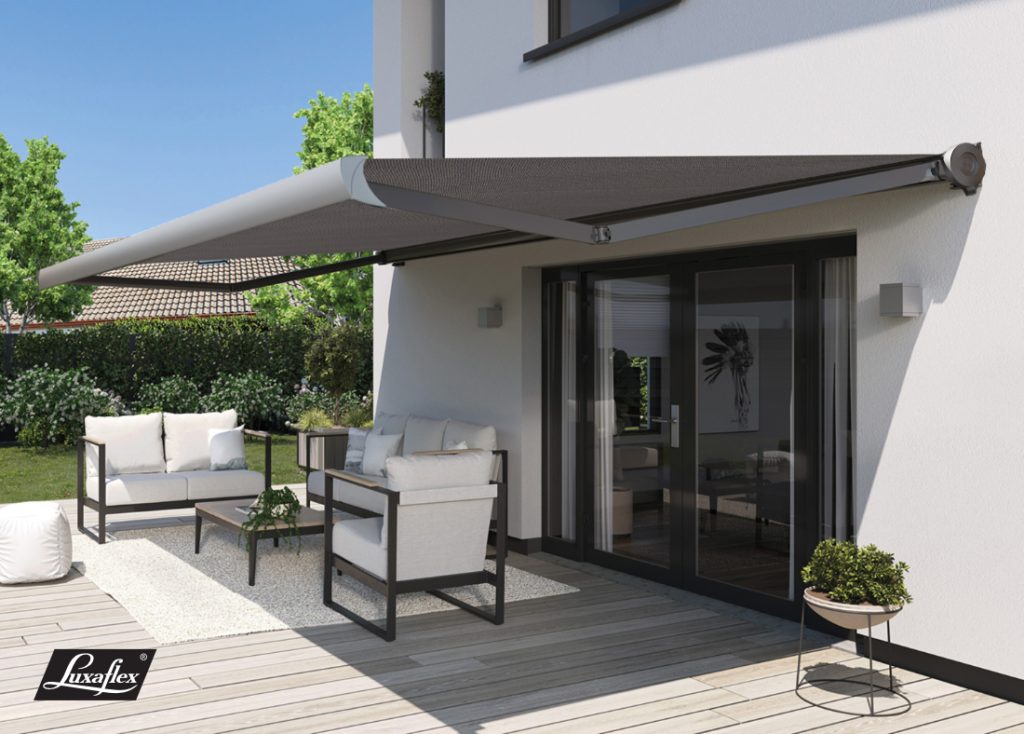
Retractable awnings are a popular choice for bifold doors, French doors, sliding doors and wide garden-facing windows.
When extended, the awning creates shade over both the patio and the glazing behind it. This can help protect the adjoining kitchen, dining room or living area from strong sunlight.
When shade is no longer needed, the awning can be retracted to allow more daylight and warmth into the home. This flexibility is particularly useful here in the UK, where conditions can change throughout the day and between seasons.
During a hot summer afternoon, you may want the awning fully extended. On a cooler spring morning, you may prefer to leave it retracted and benefit from the warmth of the sun.
Our Luxaflex and markilux retractable awnings are made to measure, allowing the width and projection to be planned around your windows, doors and patio.
Match your awning to the direction of the sun
South-facing rooms may be exposed to the sun for prolonged periods during the day. West-facing rooms often experience intense sunlight later in the afternoon and early evening, when the building may already have absorbed heat for several hours.
An awning fitted above the main windows or doors can help shade the glazing during these periods. However, the width, projection, installation height and angle all affect where the shade will fall.
An awning that is too narrow may leave part of the window exposed. One with insufficient projection might shade the patio at midday but fail to protect the glazing when the sun sits lower in the sky.
Where low afternoon sun is a particular problem, some awnings can be combined with a drop valance or vertical front screen. This can provide additional shade below the front edge of the awning while also increasing privacy around the patio.
When helping you choose an awning, we consider the orientation of the property, the dimensions of the glazing and the times of day when overheating is most noticeable.
Shade balconies and smaller areas
When you think of an awning, you probably think of a large patio – but compact systems can also provide shade over balconies, small terraces and individual windows. A correctly sized awning can make a sunny balcony more comfortable while reducing the direct sunlight reaching the room behind it.
This may be particularly helpful for flats and apartments with large glazed doors, limited natural shade or rooms that become hot later in the day.
The suitability of an awning will depend on the structure of the building, the available fixing points and any requirements set by the freeholder or property management company. We can assess the space and explain which options may be appropriate.
Use external screens for windows and large areas of glazing
While an awning is ideal for shading patio doors and creating a covered outdoor area, external screens are excellent for individual windows and large glazed openings. As they are fitted outside the glass, they reduce heat and glare before sunlight enters the room. They also provide greater privacy and help protect flooring, furniture and fabrics from fading.
Our external screen range includes options for different window sizes and styles of property, including systems designed for expansive glazing. We can help you decide whether an awning, an external screen or a combination of both would provide the most useful shade for your home.
Consider motorisation and weather sensors
An awning is most effective when it is extended before the strongest sunlight reaches your windows. Motorisation makes it easier to adjust the awning throughout the day. Instead of using a manual winding handle, you can operate it with a wall switch, remote control or compatible smart system.
Optional sun sensors can trigger the awning when sunlight reaches a set level. Wind sensors can help protect the awning by retracting it when conditions become unsuitable. As the sun rises extremely early at this time of year, this can be very useful – nobody wants to get up at sunrise to extend their awning manually!
Both Luxaflex and markilux awnings are available with motorised controls. Depending on the product, you may also be able to add integrated LED lighting, heating or smart home compatibility. Lighting and heating do not contribute to keeping the house cool, but they can make the shaded outdoor area more useful after the sun goes down or during cooler weather.
Plan your awning around your home
The sun changes position throughout the day and across the seasons. Nearby buildings, trees and other structures can also affect where sunlight and shade fall.
Before choosing an awning, it helps to consider:
- Which windows receive the most direct sunlight
- What time the adjoining rooms become hottest
- Whether the sun is high or low at that time
- How much of the patio you want to cover
- Whether you need additional shade from a valance or side screen
- How far the awning needs to project
A professional survey allows the width, projection, fixing position and operating angle to be planned around the property. This helps ensure that the awning provides useful shade rather than simply looking attractive when extended.
Discover Luxaflex and markilux awnings in our showroom
When trying to keep your house cool, we know that the best way is to prevent heat from entering in the first place. An awning offers a practical way to shade exposed windows and doors while making your garden or patio more enjoyable.
At Littlehampton Blinds, we offer made-to-measure awnings from both Luxaflex and markilux. Our team can explain the differences between the ranges and help you compare cassette styles, fabrics, frame finishes, motorisation and weather sensors.
Visit our Littlehampton showroom to explore the Luxaflex and markilux awning ranges in person, or speak to us about the best way to shade your home.